
Rebranding Doesn’t Mean Losing Your Brand DNA
A reflection from our work with Panadería San Gabriel

Introduction
One of the most common fears we hear from founders is simple and honest:
“If we rebrand, will we lose what makes us us?”
It’s a valid concern — especially for brands with history, community recognition, or emotional equity. Rebranding is often perceived as erasure. A clean slate. A break from the past.
But that assumption is flawed.
Our work with Panadería San Gabriel reminded us of something we strongly believe:
Rebranding, when done strategically, is not about replacement. It’s about preservation.
The Tension Behind the Project
Panadería San Gabriel wasn’t a brand that needed to be “fixed.”
It had years of presence, familiarity, and trust. People recognized it. They returned to it. It had character.
But like many growing businesses, time had introduced friction:
Visual inconsistency
A brand that felt dated, but still loved
Uncertainty about how much change was “too much”
The challenge wasn’t creativity.
It was responsibility.
How do you evolve a brand without breaking the connection people already have with it?
Why We Didn’t Start With Design
The temptation in projects like this is visual.
New logo. New colors. New everything.
But that would have been the wrong first move.
Before touching aesthetics, we focused on understanding:
What people already associated with the brand
What absolutely could not be lost
What had quietly stopped serving the business
This wasn’t about nostalgia for nostalgia’s sake.- It was about identifying brand DNA — the non-negotiables that made San Gabriel San Gabriel.
Rebranding as Refinement, Not Reinvention
One of the most important decisions in this project was restraint.
We didn’t chase trends.
We didn’t over-modernize.
We didn’t try to make the brand something it wasn’t.
Instead, we asked a quieter question:
“What happens if we do less — but do it intentionally?”
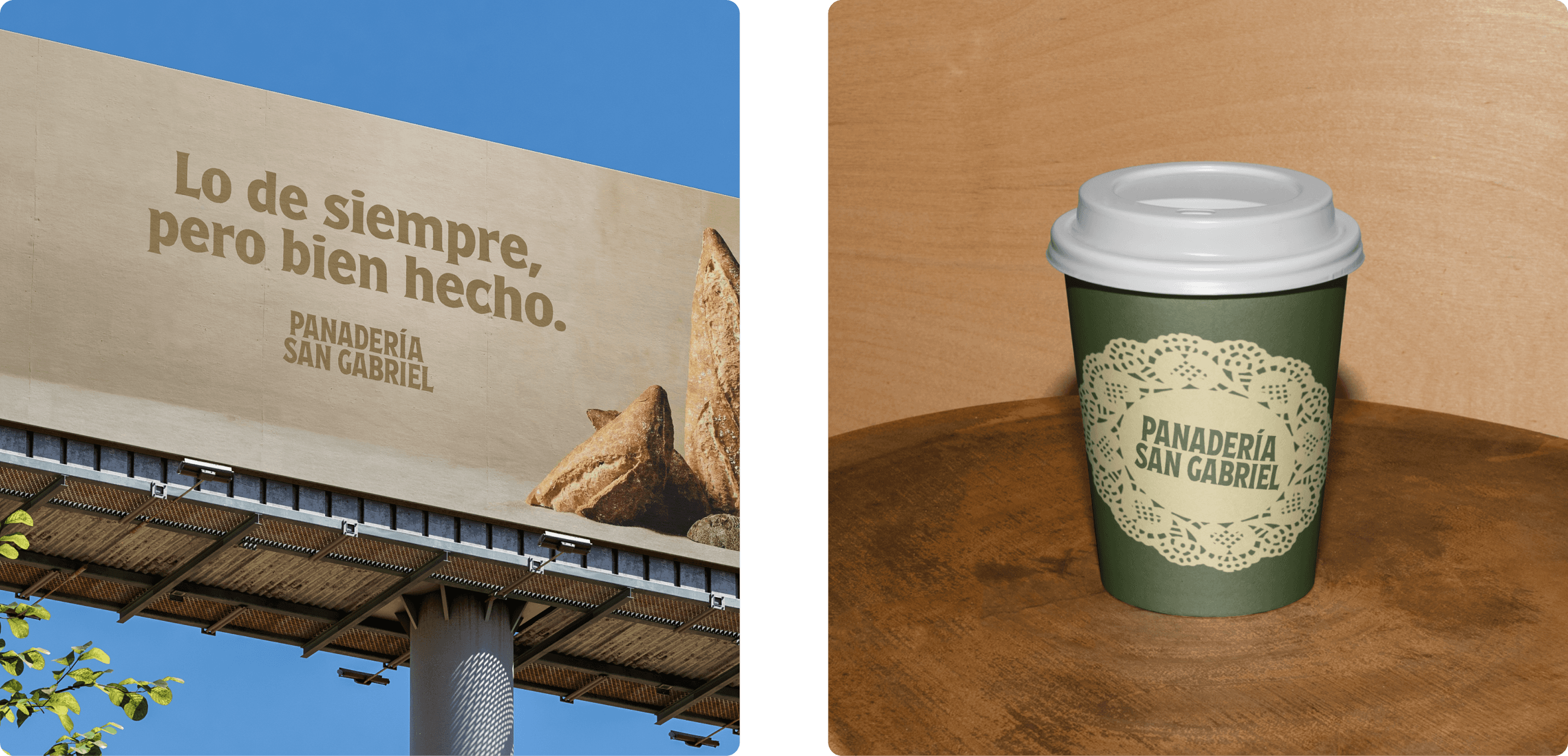
The result wasn’t a brand that shouted “new.”
It was a brand that felt clearer, more confident, and more itself.
That’s often the sign of a successful rebrand:
People notice the improvement, but can’t quite pinpoint why.
The Emotional Side of Rebranding
What doesn’t get talked about enough is that rebranding is emotional.
For founders and family businesses, a brand isn’t just an asset — it’s memory, effort, identity, and pride. Letting go of parts of it can feel personal.
This is why strategy matters so much.
Strategy creates a buffer between emotion and decision-making. It allows change to happen without panic, without extremes, and without regret.
Rebranding shouldn’t feel like loss.
It should feel like alignment.
What This Project Reinforced for Us
Working on Panadería San Gabriel reinforced a belief we already held, but don’t always say out loud:
Not every brand needs to look radically different to move forward.
Sometimes, brands just need clarity, structure, and respect for what already works.
Rebranding isn’t about being louder.
It’s about being more intentional.
Final Thoughts
If you’re considering a rebrand and feeling hesitant, that hesitation isn’t a weakness — it’s a signal.
It means there’s something worth protecting.
The role of strategy is to identify that core, so evolution doesn’t turn into erasure. When rebranding is led by clarity instead of urgency, brands don’t lose their identity — they finally express it properly.
Sebastian
Senior Strategist
Strategy, Press, Process


